
Group
Environment
- Tackling climate change
- Climate-related financial disclosures
- Minimising environmental footprint
- Transitioned facilities in Myanmar and Canada to renewable energy sources, with solar and hydropower supplying the majority of operations and reducing reliance on fossil fuels
- Established a target to generate 19,000 MWh of renewable energy per year by 2035. The pilot project in the Chinese Mainland aims to generate renewable energy each year equivalent to approximately 50% of 2025 purchased electricity in the Chinese Mainland
- Expanded biofuel deployment in Europe, reducing emissions through HVO100 allocations and collaborating on renewable fuel solutions for ocean freight decarbonisation
- Advanced clean energy adoption in Hong Kong through renewable diesel pilots, cutting lifecycle emissions while ensuring operational resilience
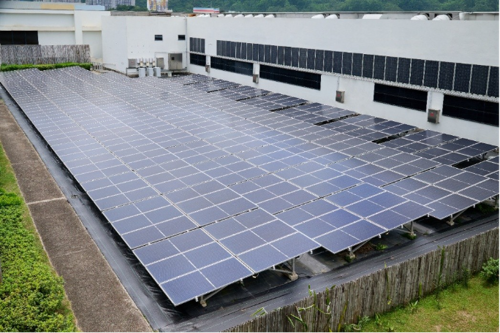
In Chinese Mainland: In 2025, eight additional sites were identified for installations. KLN has established a target to generate 19,000 MWh of renewable energy per year by 2035. The projects in the Chinese Mainland aim to generate renewable energy each year equivalent to approximately 50% of 2025 purchased electricity in the region.
In Hong Kong: We are piloting a cutting-edge energy-saving “e-Clean” technology at our warehouses. This solution ensures stable power supply and normal equipment operation, while delivering multiple sustainability benefits. It suppresses the generation of harmful electromagnetic waves, eliminates line noise during power transmission, reduces heat output, and lowers carbon dioxide emissions associated with electricity generation.
In Myanmar: In November 2025, dry port operations in Yangon and Mandalay began installation of hybrid solar systems. By December 2025, the systems were fully operational, and based on current records, annual onsite generation is estimated at 237,250 kWh at Yangon and 158,775 kWh at Mandalay, subject to seasonal variation.
In Canada: Since the establishment of our International Freight Forwarding operations in Montreal, KLN has relied solely on hydropower for electricity year-round, and between April and November at our Integrated Logistics facilities. In 2025, KLN Canada intensified monitoring of energy and material consumption, with frontline teams actively pursuing energy and packaging material savings. Electric forklifts have replaced all fossil fuel-based predecessors.
Piloting renewable diesel in Hong Kong: KLN has begun to test the use of renewable diesel in Hong Kong. This solution delivers approximately 30% lower lifecycle emissions compared with conventional diesel, with higher blends such as R33 Diesel enabling seamless integration into road transport operations.
Biofuel Usage: KLN’s EU team secured a 1,000-litre allocation of HVO100 biofuel as part of its sustainability initiatives. The allocation was provided to an ocean freight customer under a book and swap arrangement, enabling the customer to achieve an emissions reduction up to approximately 300 tCO₂e.
